Introduction
Ever wondered how much weight a garbage truck can lift? These trucks handle everything from small bins to large dumpsters.
In this article, we explore how much weight garbage trucks can lift. You’ll learn about different types of trucks and the factors that affect their capacity.
Trucks like those from KUNGMU TRUCK are designed for efficiency. Learn more about our products today.
Understanding Garbage Truck Weight Capacity
Garbage trucks come in different designs and sizes, and their lifting capacity varies accordingly. On average, a standard garbage truck can lift between 10,000 to 20,000 pounds (4,500 to 9,000 kilograms) of waste. However, the actual capacity depends on factors such as the truck type, the hydraulic system, and how the weight is distributed in the waste bins. This section will dive deeper into the weight lifting limits of different types of garbage trucks and what determines their capacities.
Types of Garbage Trucks and Their Lifting Capacities
Garbage trucks are designed for various tasks, from residential waste collection to large-scale commercial waste removal. The lifting capacity varies based on the truck type, the design, and its intended use. Each type of truck is tailored to specific needs, ensuring efficient waste management across different environments.
Rear-Loader Trucks
Rear-loader trucks are typically used for residential waste collection. These trucks feature a large rear opening where waste is dumped into a hopper. The lifting system is designed to handle household-sized bins and smaller commercial dumpsters. Rear-loaders typically lift between 300 and 600 pounds per bin and can carry between 8 to 15 tons of compacted waste. Due to their versatile design, they are often used for curbside collection in urban and suburban areas.
Rear-loaders are ideal for residential areas, especially in neighborhoods with limited space. The compact design of these trucks allows for efficient waste collection, even in tight or narrow streets. Their lifting mechanism is powerful enough to handle both regular household waste and smaller commercial waste bins.
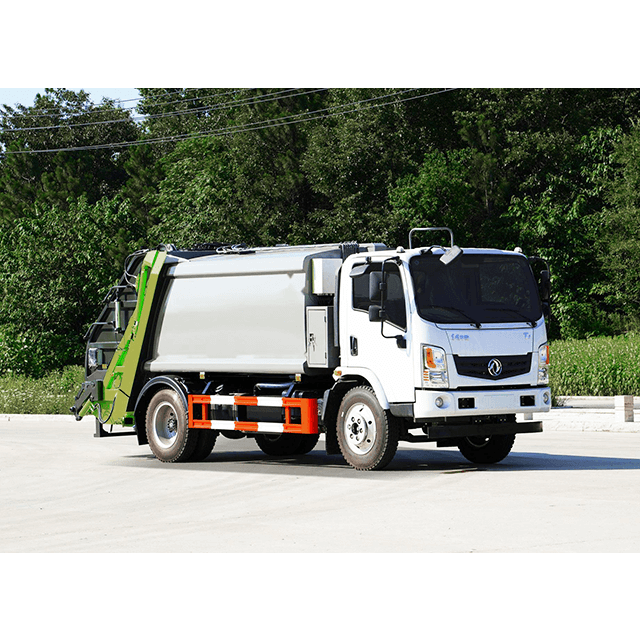
Front-Loader Trucks
Front-loader garbage trucks are primarily used for commercial waste collection, where larger dumpsters are involved. These trucks are equipped with large hydraulic forks that can lift dumpsters weighing between 4,000 and 8,000 pounds. The lifting arms are designed to handle heavy-duty containers, making front-loaders suitable for businesses such as restaurants, shopping centers, and large offices. Their payload capacity ranges from 12 to 25 tons, depending on the truck size and the compaction system used.
Front-loaders are most effective in high-density commercial areas where waste volumes are larger, and the trucks need to lift heavy commercial dumpsters efficiently. They are equipped with robust hydraulic systems that enable them to handle the added weight with ease.
Side-Loader Trucks
Side-loader trucks are equipped with an automated arm that lifts residential carts from the side of the truck. These trucks are particularly useful in areas with limited street access, such as narrow residential streets or locations where front- or rear-loader trucks may struggle. Side-loaders can lift between 300 and 500 pounds per cart and typically carry 8 to 14 tons of compacted waste.
Side-loaders are gaining popularity due to their efficiency and ability to be operated by just one person, minimizing the need for multiple staff members. This makes them ideal for urban areas with limited parking and accessibility, offering both safety and operational efficiency.
Roll-Off Trucks
Roll-off trucks are used for large-scale projects like construction, demolition, and industrial waste management. These trucks utilize a hydraulic system to roll large dumpsters onto the bed of the truck. Roll-off trucks can handle containers weighing up to 40,000 pounds (20 tons) and are capable of transporting up to 25 tons of debris, depending on the size of the container.
Roll-off trucks are designed for larger, heavier waste loads, such as construction debris or large-scale cleanouts. They are typically used at construction sites, industrial locations, and during large-scale clean-up projects. The lifting capacity and design of roll-off trucks make them ideal for handling massive amounts of waste without compromising safety or efficiency.
Each type of garbage truck is engineered with specific lifting systems tailored to its intended purpose. Whether for residential waste or heavy-duty commercial removal, these trucks provide the flexibility needed to keep waste management operations running smoothly across diverse environments.
Truck Type | Lifting Capacity | Payload Capacity | Typical Use Case |
Rear-Loader | 300-600 lbs | 8-15 tons | Residential & Small Commercial |
Front-Loader | 4,000-8,000 lbs | 12-25 tons | Commercial & Industrial |
Side-Loader | 300-500 lbs | 8-14 tons | Residential |
Roll-Off Truck | 40,000-60,000 lbs | 20-25 tons | Construction & Demolition |
Factors Affecting Weight Capacity
Several factors influence how much weight a garbage truck can safely lift and carry. While the truck's design is the most obvious factor, other variables play a significant role in determining the truck's lifting ability.
Hydraulic Systems
The hydraulic arm is the main mechanism that powers the lifting system of a garbage truck. Hydraulic systems operate under high pressure, usually ranging from 2,000 to 3,000 psi. The strength of the hydraulic system directly correlates with the weight it can lift. Trucks with stronger hydraulic systems can handle heavier loads with more ease.
Weight Distribution
The way the weight is distributed in the bin plays a crucial role in the lifting process. Uneven weight distribution can cause the lifting mechanism to struggle, potentially damaging the truck or causing safety hazards. For instance, unevenly distributed trash can create challenges in lifting and dumping, leading to equipment strain.
Type of Waste
The nature of the waste being collected also affects lifting capacity. Lighter materials like paper or plastic are less of a challenge for garbage trucks, whereas dense materials such as construction debris or wet organic waste can increase the total weight. Trucks need to adjust their lifting capabilities depending on the type of waste in the bin.
Local Regulations
Local road weight restrictions are another important factor. Many municipalities impose weight limits for garbage trucks to prevent road damage and ensure safety. Trucks must comply with these weight regulations, which can sometimes reduce their effective lifting capacity.
Factor | Impact on Lifting Capacity | Example |
Hydraulic Systems | Determines how much weight the truck can lift | Stronger systems handle more weight |
Weight Distribution | Uneven weight can cause lifting challenges | Heavy materials create more strain |
Type of Waste | Heavier or denser waste requires more lifting power | Wet debris adds more weight |
Local Regulations | Weight limits on roads reduce lifting capacity | Roads may limit truck weights |
Practical Examples of Garbage Truck Capacity
Understanding the practical applications of garbage truck capacities is essential for municipalities and waste management companies to plan their operations effectively. These trucks are designed to lift and transport waste of varying sizes and weights, allowing for more efficient collection across different environments. Below are some practical examples of how garbage truck lifting capacities are applied in real-world scenarios.
Residential Waste Collection
A typical rear-loader truck, used for residential waste collection, can collect waste from approximately 2,500 households in a single trip. Assuming an average household waste of 8 pounds per person, this truck can easily lift and transport up to 20 tons of waste. The rear-loader’s ability to efficiently handle household waste ensures smooth operation on residential routes, even in busy urban areas. With its moderate lifting capacity, it helps maintain cleanliness in neighborhoods while avoiding delays in collection.
Commercial Waste Collection
For commercial waste collection, front-loader trucks are more suitable due to their higher lifting capacity. These trucks can handle large dumpsters typically used by businesses like restaurants, office buildings, and shopping centers. A front-loader, for instance, can collect up to 15,000 pounds of waste in a single lift, depending on the size of the containers. In commercial areas, where waste generation is significantly higher, front-loaders are crucial for efficiently managing waste disposal without interrupting business operations.
Large-Scale Projects
Roll-off trucks are essential for large-scale waste removal projects, such as those found at construction sites or during large clean-ups. These trucks are designed to handle heavy and bulky waste materials, with lifting capacities ranging from 20,000 to 40,000 pounds. Depending on the size of the container and the amount of debris, roll-off trucks may need to make multiple trips if the debris exceeds the truck's weight limit. The ability to handle such large and heavy loads makes roll-off trucks indispensable for large-scale waste management operations, ensuring that construction sites and demolition zones are cleared efficiently.
Technological Advancements in Garbage Truck Lifting Systems
The garbage truck industry has seen several technological advancements that have significantly increased lifting capacities and operational efficiency. These improvements make waste management systems more reliable, cost-effective, and environmentally friendly. Below are some key advancements in garbage truck lifting systems.
Advanced Hydraulic Systems
The development of advanced hydraulic systems has greatly improved the lifting capabilities of garbage trucks. New hydraulic systems feature higher pressure ratings, which enable trucks to lift heavier loads with greater efficiency. These modern systems are designed to handle higher weights while also reducing wear and tear on the equipment. As a result, garbage trucks can handle larger payloads and operate more reliably, minimizing downtime and reducing the need for frequent repairs. These systems are essential for ensuring that trucks can manage the growing volume of waste generated in both residential and commercial areas.
AI and Automation
Artificial intelligence (AI) and automation are playing an increasingly significant role in the optimization of garbage truck lifting systems. These trucks are equipped with smart sensors that can detect the type and weight of the waste being collected. The AI-powered system then adjusts the lifting mechanism to optimize performance, ensure safety, and prevent damage to the vehicle. The integration of these technologies allows for more efficient route management and waste collection, reducing manual labor while improving the overall efficiency of the waste management process.
Future Trends
As the waste management industry continues to evolve, garbage trucks are expected to become even more advanced. One of the most promising innovations is the development of autonomous garbage trucks, which are capable of lifting and collecting waste without human intervention. These autonomous vehicles use advanced sensors, AI, and robotics to operate safely and efficiently, reducing the need for manual labor and enhancing overall productivity. As these technologies are further refined, we can expect garbage trucks to become even more efficient, environmentally friendly, and capable of meeting the increasing demands of urban waste management.
Conclusion
Garbage trucks are essential for waste management, handling waste from residential bins to large roll-off containers. These trucks can lift between 800 pounds and 40,000 pounds, depending on the type. Advancements in hydraulic and AI technology are improving their efficiency and safety. As technology continues to evolve, garbage trucks will become even more powerful, addressing the growing demands of urban waste management. Trucks like those from KUNGMU TRUCK offer enhanced lifting capacity and reliability, ensuring efficient operations.
FAQ
Q: How much weight can a garbage truck lift?
A: A garbage truck can typically lift between 300 pounds to 40,000 pounds depending on the truck type, from residential bins to large commercial dumpsters.
Q: What is the maximum payload capacity of a front-loader garbage truck?
A: Front-loader trucks can typically lift dumpsters weighing between 4,000 and 8,000 pounds and carry a payload capacity of up to 25 tons.
Q: How do weather conditions affect the lifting capacity of garbage trucks?
A: Harsh weather conditions, such as snow or ice, can reduce a truck’s ability to lift heavy waste, as the hydraulic systems may struggle under such conditions.
Q: Can garbage trucks lift construction debris?
A: Yes, roll-off trucks are designed to lift construction debris, with a lifting capacity of up to 40,000 pounds depending on the size of the container.


